Pre-development to 1750:
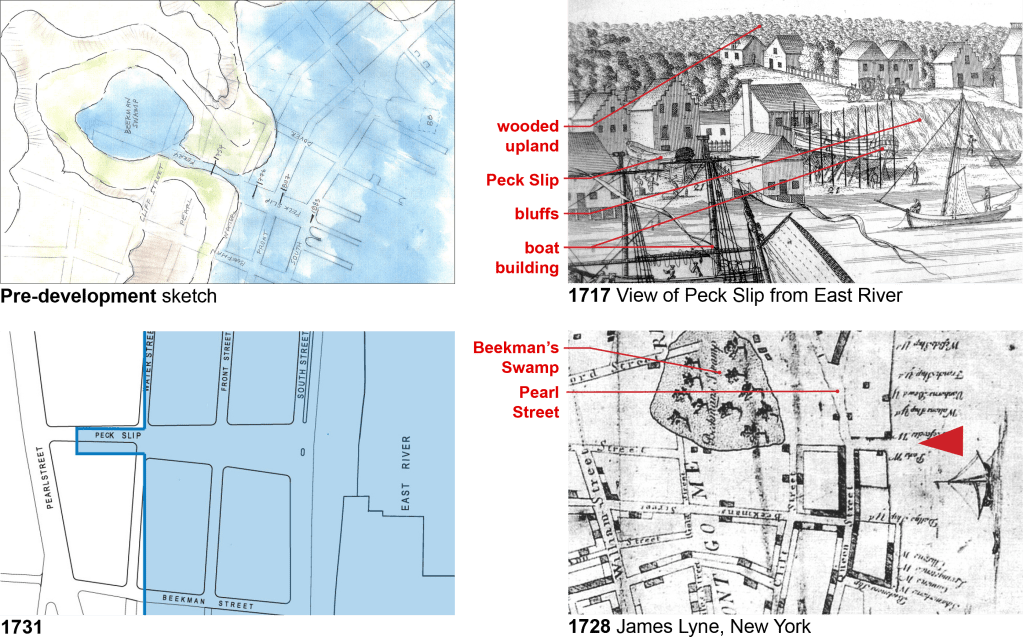
The natural shoreline is close to Water Street – Peck Slip site is submerged by the East River. A creek drains from Beekman’s Swamp to the East River forming a small cove.
Beekmans Swamp is surrounded by high wooded bluffs. The northern bluff later forms the anchorage for the Brooklyn Bridge.
1630 Pearl Street is laid out near the waterfront. The street becomes the commercial hub of Manhattan. The shoreline is developed with workshops, warehouses and wharves. Residents trade, farm and built boats for fishing in the river.
1640 First ferry service begins between from Peck Slip to Brooklyn, using rowboats and flat bottom pull boats.
1660 Three markets are established in Manhattan, all on the East River: a fish market at Broad Street, a meat and fish market at Maiden Lane and a general produce market at Peck Slip. Long Island farmers bring produce to market by boat.
1690 Common Council grants water lots at the East River on the condition that owners build a waterfront street or wharf at the low watermark.
1730 Filling of water lots at Peck Slip extends shoreline to Water Street. The street area unfilled as an inlet or slip.
1737 Benjamin Peck builds a house near the southwestern corner of the slip and a wharf at the south edge of the slip.
1750 – 1800:
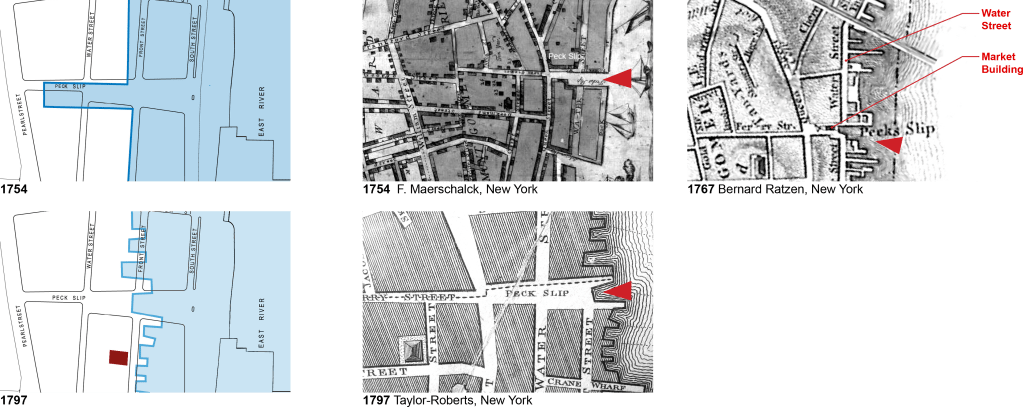
1767 Peck Slip has been filled almost as far as Front Street. Filling uses cofferdams filled with stones and rubble. A stone wharf is built at the north side of the slip. A new brick public market building is built at Water Street and Peck Slip. Market boats from Long Island use the Slip to unload produce and livestock. Brick buildings border the Slip, used as warehouses and residences of market-men and ship owners. Commercial activity includes farming, fishing, tanneries, ship yards and warehouses.
1784 – 1790 Minutes of the Common Council note at least 11 references to ship hulks in slips.
1790 Further filling has created Front Street directly to south of Peck Slip. The slip retains open water east of Front Street.
1797 The market building is removed. Piers extending beyond Front Street are approved in 1797.
1800 – 1850:
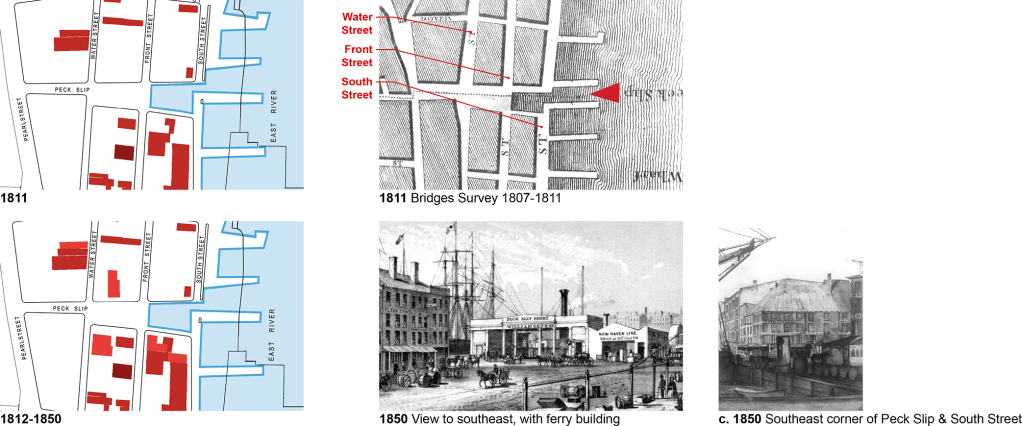
1806 Merchant Jasper Ward builds three commercial buildings in a row on Peck Slip at corner of South Street, used as Counting Houses.
1818 First regular packet begins service between NY and UK from a pier just south of Peck Slip. (Black Ball Line)
1825 Erie Canal opens. The direct water link to the Midwest boosts commerce at South Street.
1831 Independent Fulton Fish Market established – start of the independent wholesale fish market.
1835 Fire destroys much of lower Manhattan, leading to much new construction.
1838 A bulkhead is constructed at South Street and the slip is completely filled.
1841 Ferry is established between Peck Slip and Brooklyn. New wharves are constructed at the foot of Peck Slip. Ferries run every ten minutes – encourages commuting from Brooklyn.
1845 – 1860 Packet ship & Clipper ship era
– South Street & Peck Slip become the center of immigration and trade. Streets are lined with merchants, counting houses and markets. Thousands of sailors provide custom for dance halls, hotels, boarding houses, brothels and saloons. Crime and violence increase.
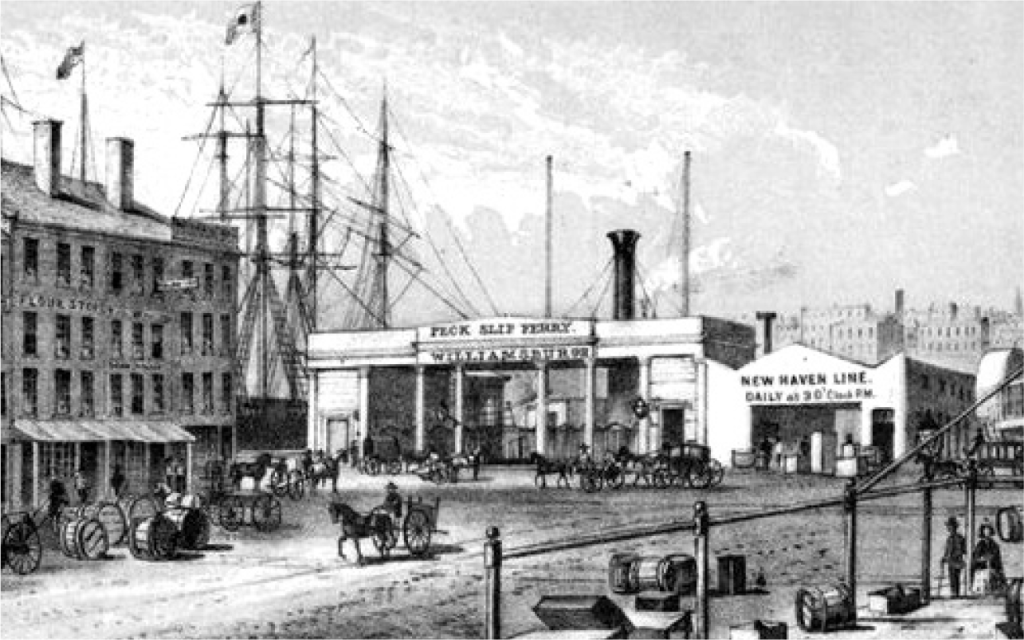
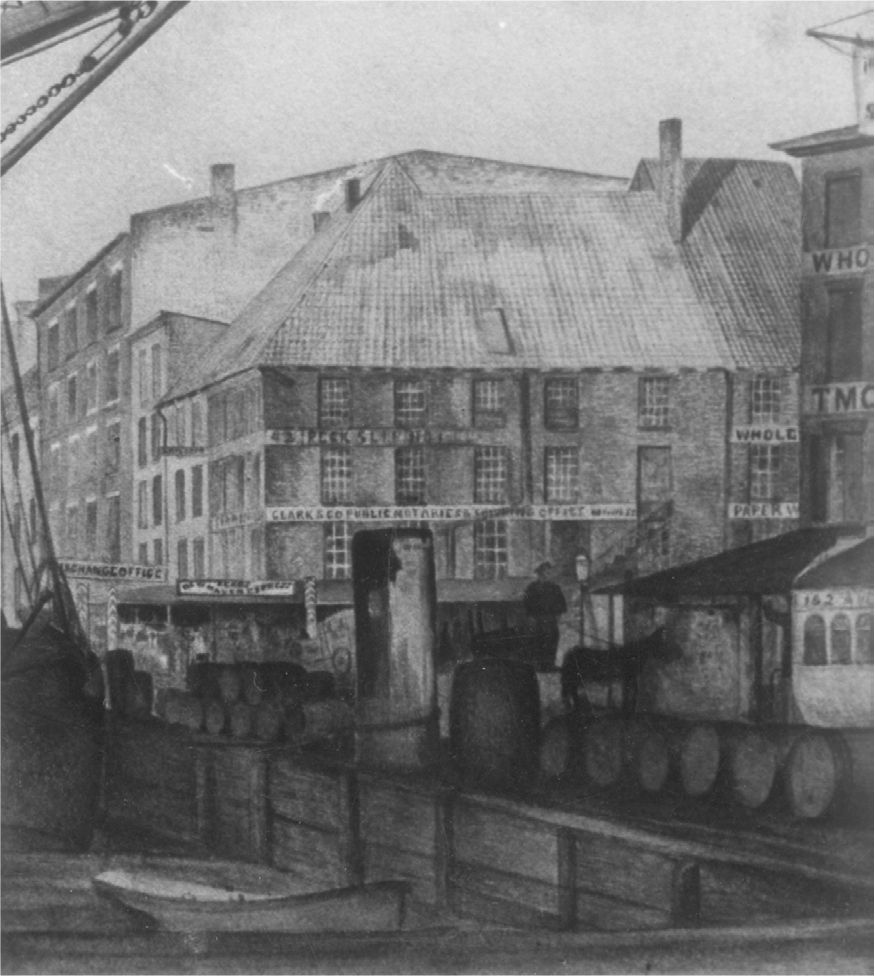
1850 View to southeast, with ferry building
Peck Slip has been filled to South Street and is used as a market place. Steamship lines are active along South Street and Ferry Buildings with service to Williamsburg and New Haven are visible across South Street.
1850’s southwest corner of Peck Slip & South St.
1850 – 1900
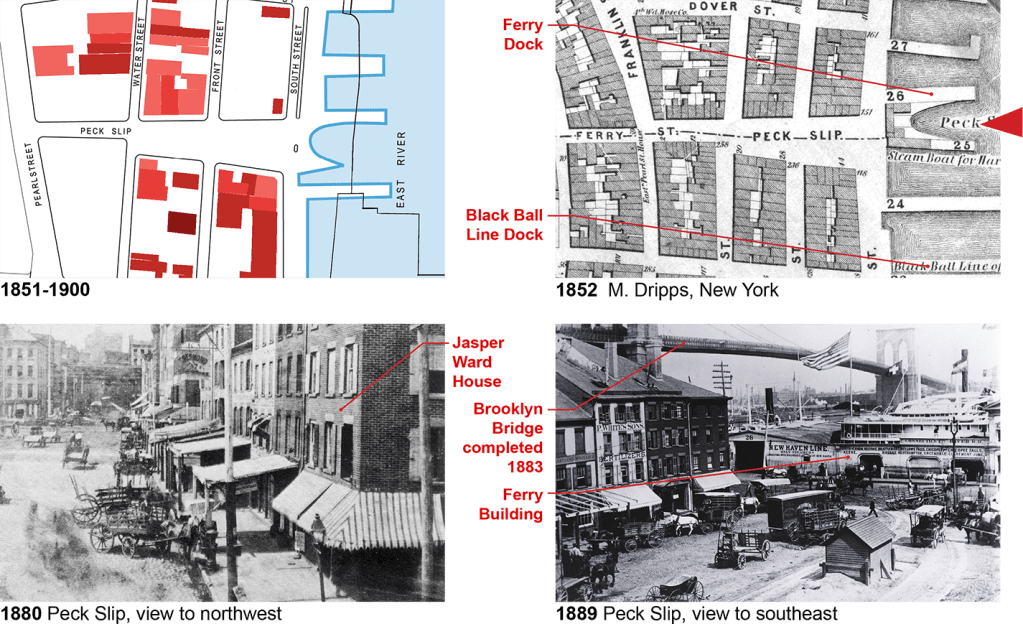
Early in the period steamship lines are active along South Street, destinations include New England, the South, the Caribbean, and Europe. Peck Slip remains a center for maritime commerce.
Later in the period, steamships become larger and need deeper waterways. The Hudson River becomes the new center of the port of New York. Most maritime businesses relocate to the Hudson. Peck Slip loses its maritime industries and becomes home to warehouses, dealers in rags, metals, and paper. South Street area becomes active as a fish market.
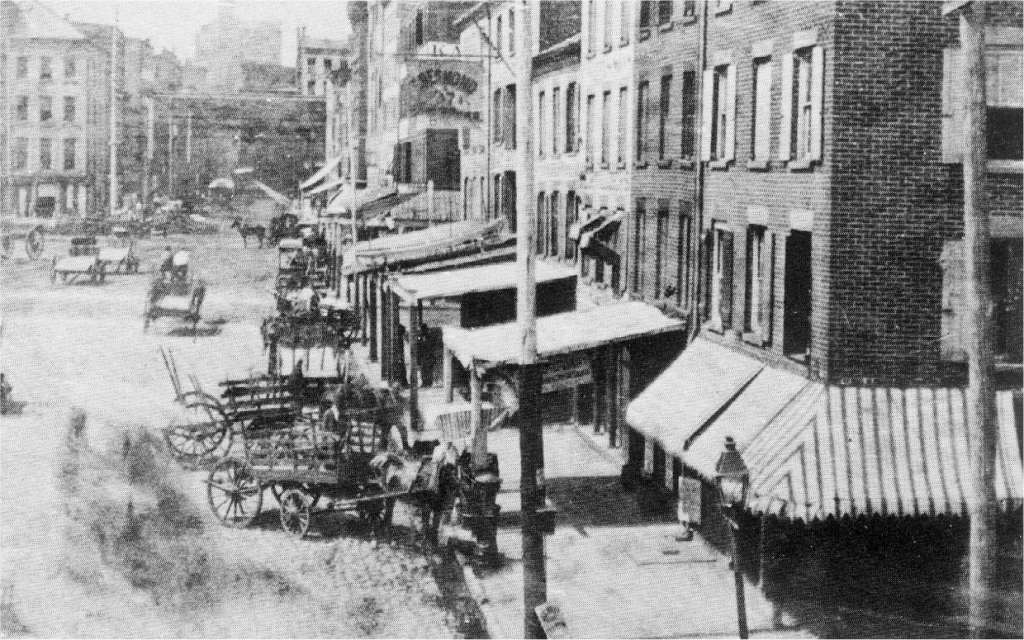
1880 Peck Slip, view to northwest
Jasper Ward’s counting house is visible at the corner of Peck Slip and South Street. Sidewalks and stone block paving has been installed in the street, along with gas lamps.
1883 Brooklyn Bridge opens.
1893 Half the stores on South Street between Beekman Street and Peck Slip are occupied by fish distributors.
1899 Fresh water fish dealers move to Peck Slip and by 1909 it is the main fresh water fish market. Many fish came from Great Lakes including pike, perch, carp and buffalo fish.
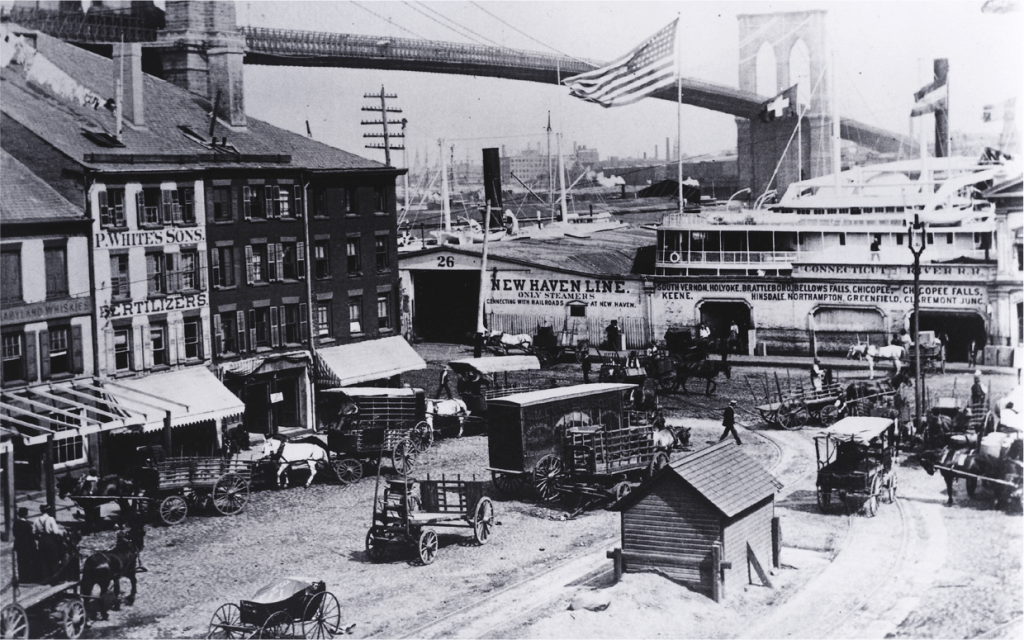
1889 Peck Slip, view to southeast
The newly constructed (1883) Brooklyn Bridge is visible in the background. The ferry services are still active and Peck Slip remains a center for maritime commerce and an active fish market.
1901 – 1950
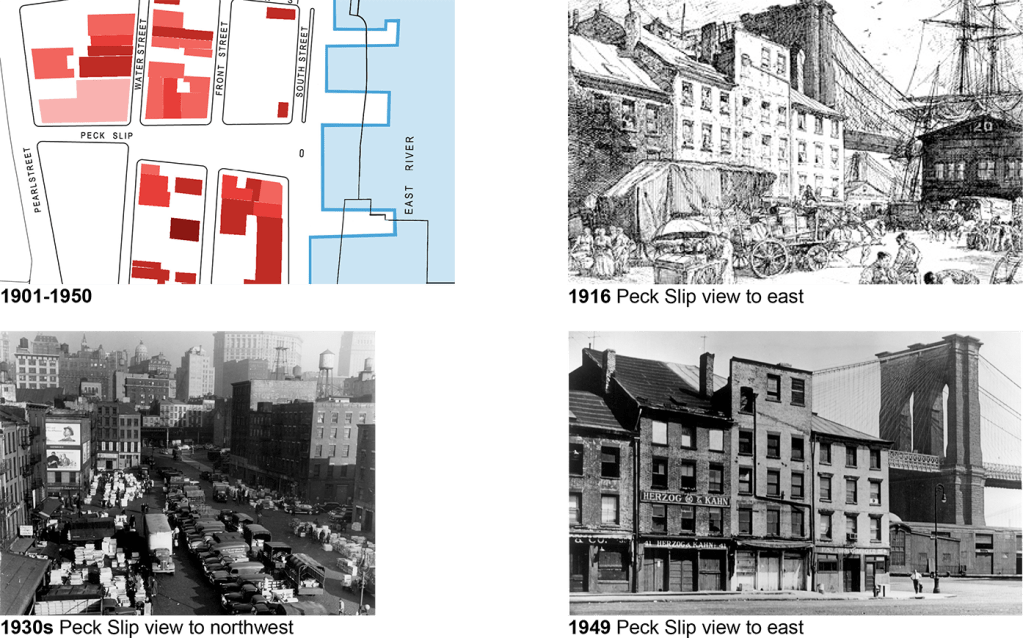
Main maritime center of NYC is on the Hudson River.
Fish market remains the primary commercial activity of the Peck Slip and South Street area.
Fish wholesalers use ground floors of Peck Slip buildings but many of the upper floors are abandoned as other businesses closed or moved.
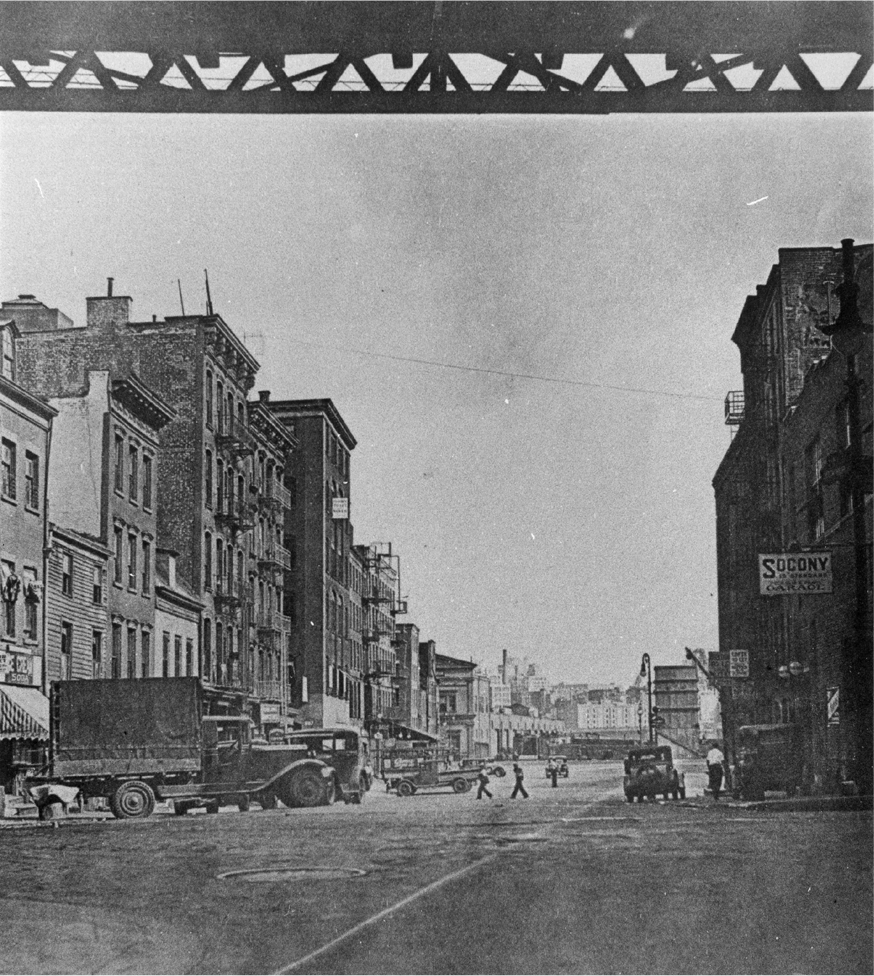
1920’s view to southeast from Pearl St.
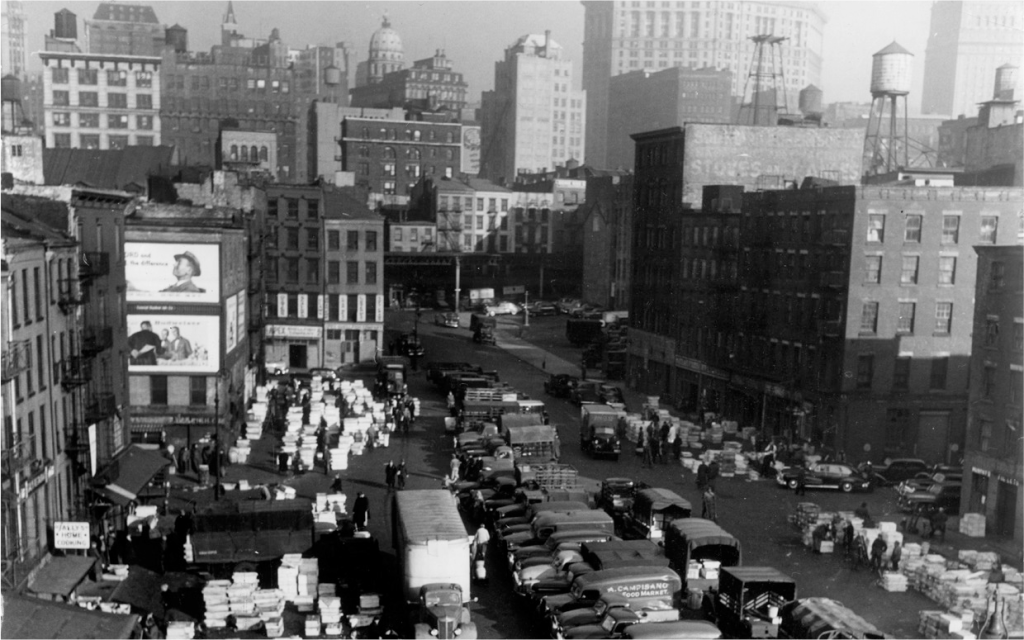
1930’s Peck Slip view to northwest
As ships become larger and need deeper waterways, the Hudson River becomes the new center of the port of New York and most maritime businesses relocate to the Hudson. The fish market is active, with trade carried on in the street and surrounding buildings.
1934 Ferry building and docks at Peck Slip are demolished, ferries have become obsolete with the completion of the Brooklyn Bridge and subway service.
1934-42 FDR Drive is constructed at grade east of South Street along the East River, separating the water’s edge from inland commercial activity.
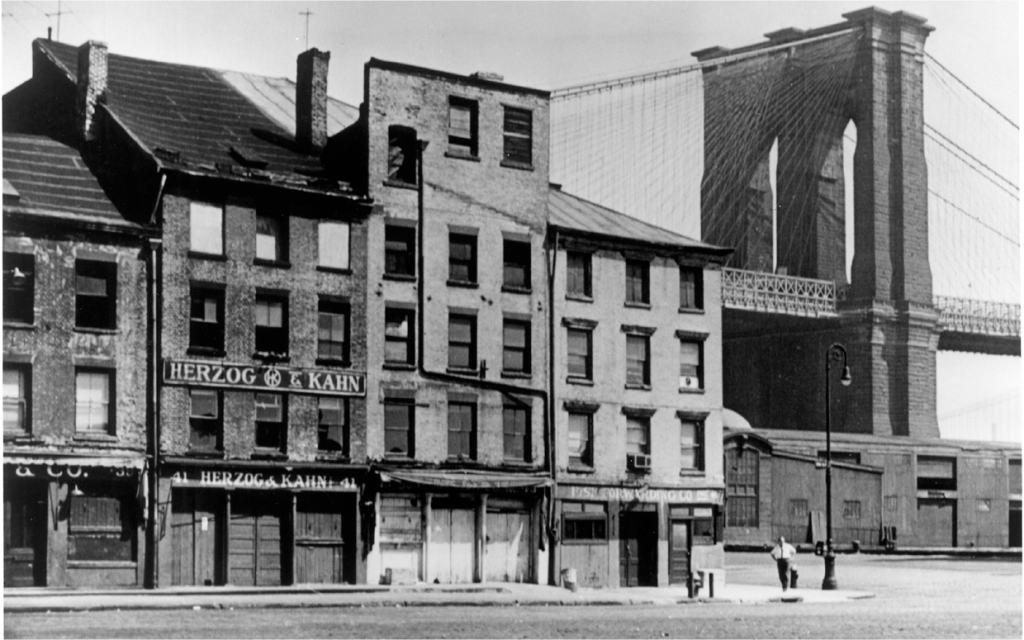
1949 Peck Slip view to east
Peck Slip loses its maritime industries and becomes home to warehouses, dealers in rags, metals, and paper. The ferry buildings along South Street have been demolished.
1951 – Present
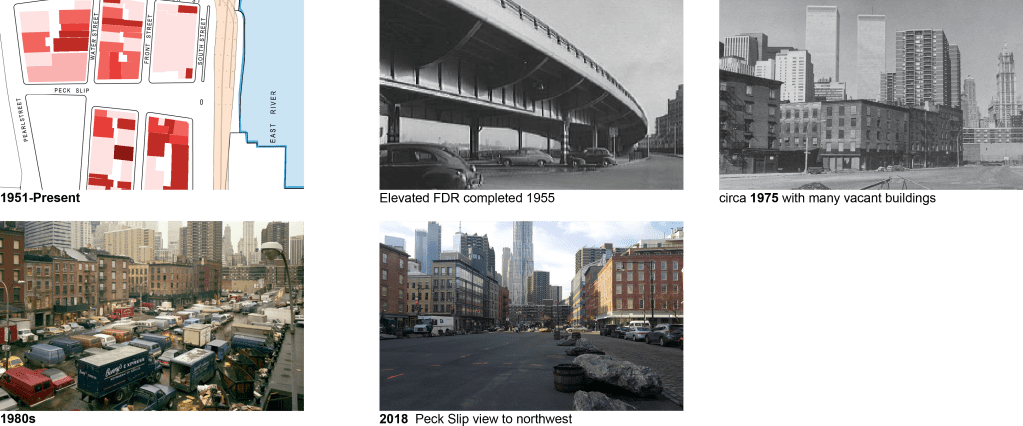
1950 Post Office building constructed between Pearl and Water Streets.
1955 Elevated FDR Drive completed, visually separating the Slip from the River.
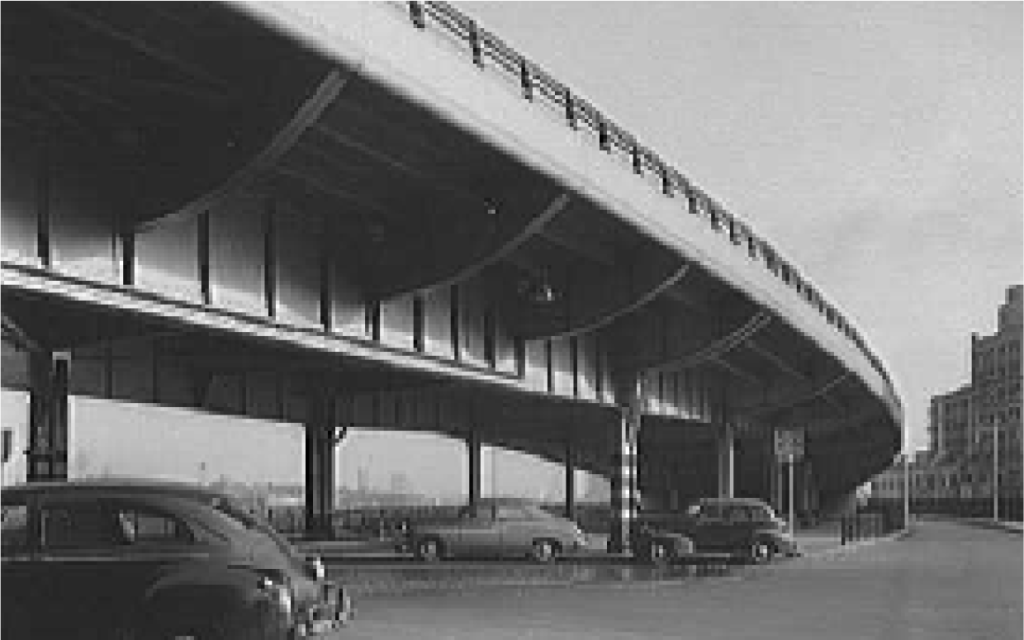
Elevated FDR completed 1955
1965 Landmarks Preservation Commission established, in response to the demolition of many older buildings.
1969 Southbridge Towers Apartments completed west of Peck Slip – cuts off Peck Slip as a through street.
1974 Con Edison builds large transformer station at Peck Slip, demolishing two of Jasper Ward’s 1806 counting houses. Peck Slip central space is used for public parking.
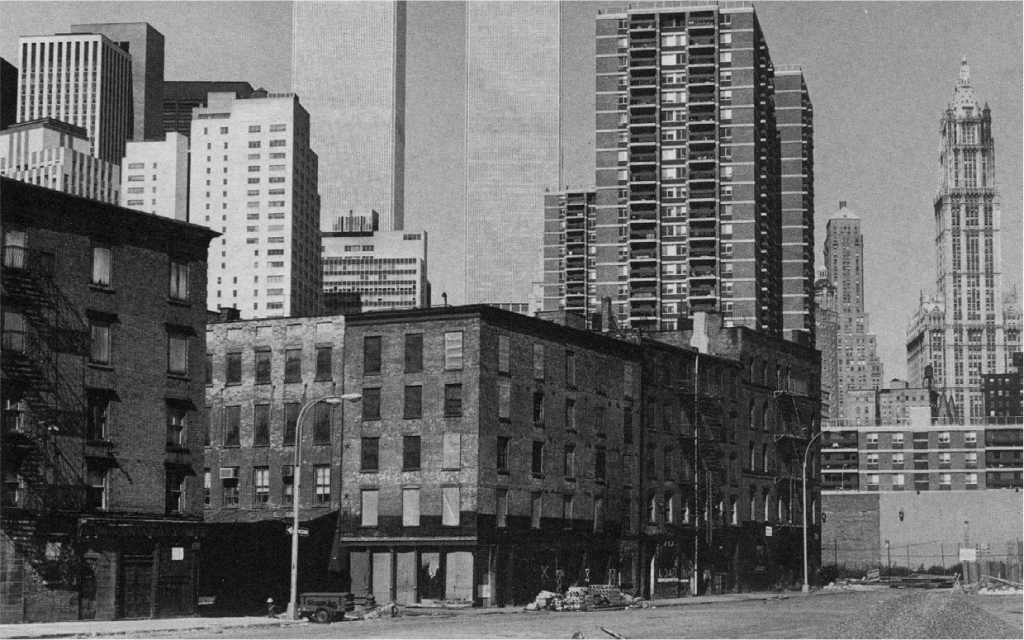
Circa 1975 View to the northwest
The FDR Drive, completed in 1955, separates the Slip from the River, and Southbridge Towers completed in 1969 west of Peck Slip, cuts off Peck Slip as a through street. Many older buildings are vacant and derelict, and in 1974 Con Edison builds transformer station at Peck Slip, demolishing two of Jasper Ward’s 1806 counting houses.
1977 South Street Seaport Historic District is designated as a Historic Landmark by NYC Landmarks Preservation Commission. The boundary is extended in 1989 to include the area bounded by Peck Slip and Pearl, Water, and Dover Streets.
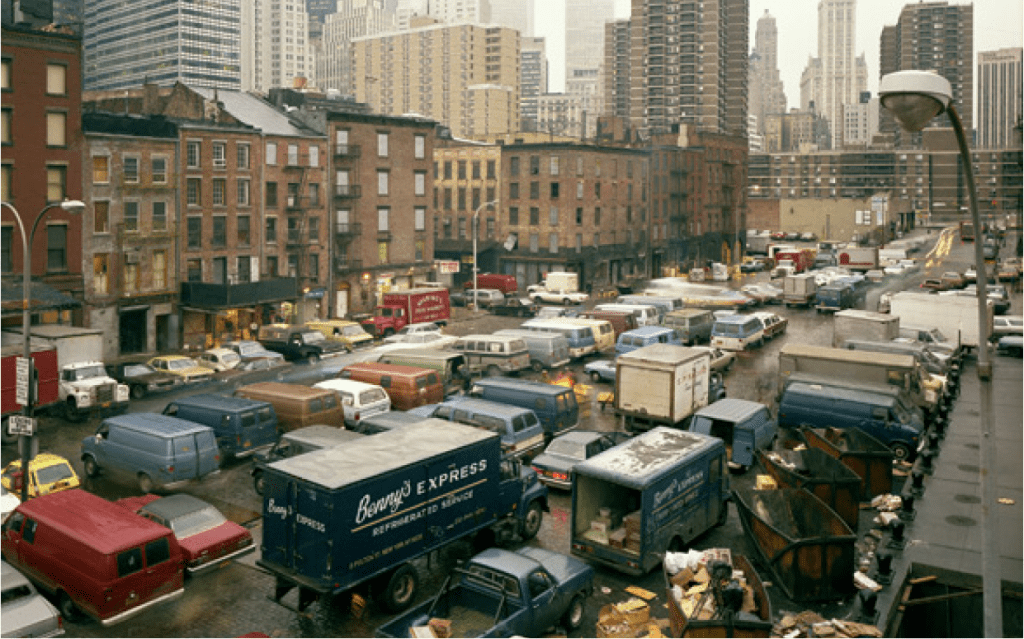
1980s view to northwest
2005 The Fish Market moves to the Bronx.
2014 Public parking is removed and central area is converted to a DOT interim plaza. Post office converted to elementary school. Today Peck Slip is a residential neighborhood with new and renovated condominiums. Ground floor stores are occupied by restaurants, bars, and other businesses.
 peckslipfriends.org